Growth Navigate Startup Tools For Social Media
Many new companies collapse because they pick the wrong software. Growth navigate startup tools are purpose-built platforms that let early-stage businesses monitor key numbers, streamline tasks, win customers, and expand on tight budgets. In February 2026, firms with the right stack grow far faster than those depending on spreadsheets.
What Are Growth Navigate Startup Tools?
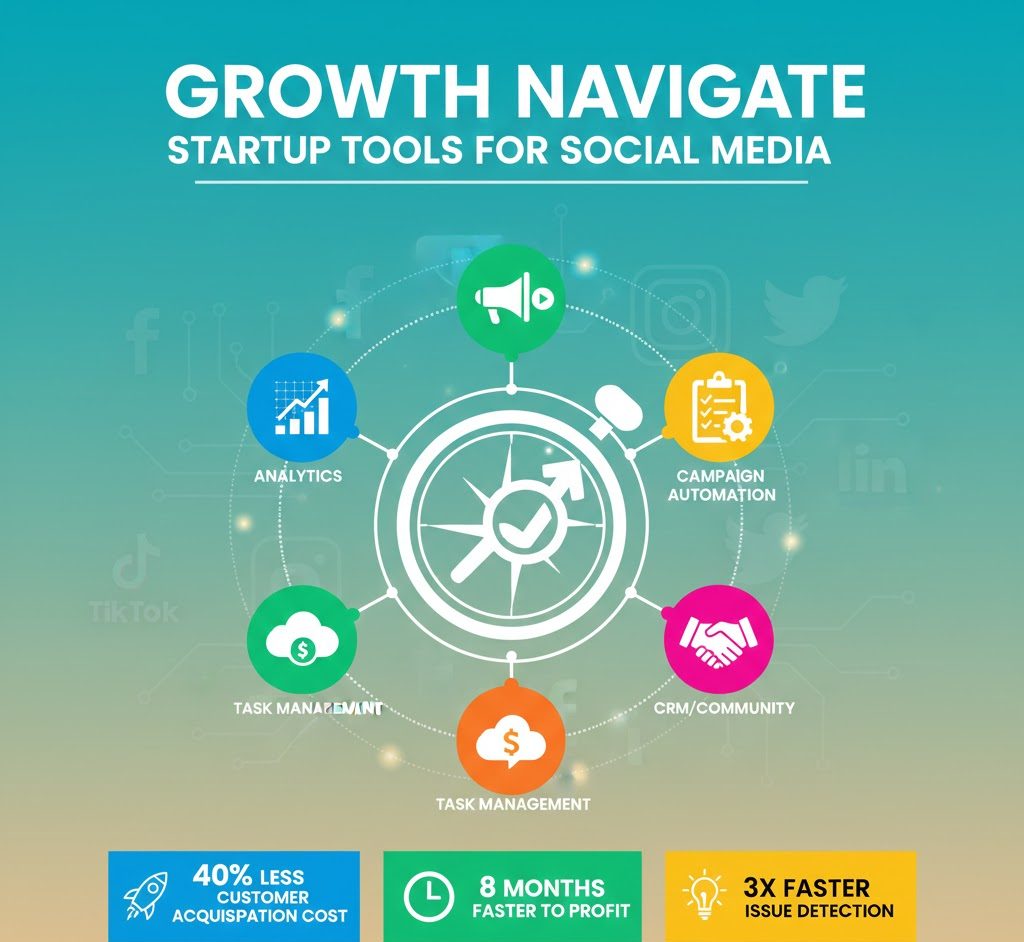
These platforms split into clear groups: tracking software, campaign automation, task managers, money-tracking apps, and sales pipeline tools. The term “navigate” fits because young companies operate with limited visibility. Solid growth navigate startup tools replace guesswork with hard data.
They’re priced for lean budgets, quick to set up, and built to expand alongside your company. Cloud-based solutions now account for 78% of startup software deployments, according to 2025 industry data. Founders comparing digital tool review platforms can filter options by category and price before committing.
Why Generic Software Fails New Ventures
Corporate-grade platforms demand months of setup and trained IT staff. Firms using purpose-built growth navigate startup tools hit profitability around 8 months sooner, pull in customers at 40% less expense, and spot failing tactics 3x earlier.
One founder burned $50,000 on Facebook campaigns before discovering LinkedIn produced better leads at a fraction of that cost. Startups that track posting frequency and its impact on audience growth across platforms avoid similar mistakes by letting data guide spend.
Top Growth Navigate Startup Tool Categories
Different software types address specific operational needs. Understanding these categories helps companies build effective technology stacks without overlap.
| Category | Recommended Platforms | Starting Price |
|---|---|---|
| User Analytics | Google Analytics 4, Mixpanel, Amplitude, Hotjar | Free – $39/mo |
| Campaign Automation | HubSpot, Mailchimp, ConvertKit, ActiveCampaign | Free – $29/mo |
| Task Management | Notion, Asana, Trello, Linear, Monday.com | Free – $10.99/user/mo |
| Sales Pipeline (CRM) | HubSpot CRM, Pipedrive, Copper, Folk | Free – $29/user/mo |
| Financial Tracking | QuickBooks, Bench, Baremetrics, Runway | Free – $299/mo |
| Customer Support | Intercom, Zendesk, Help Scout, Crisp | $10/mo – $39/mo |
Campaign Automation for Social Media
Automation handles repetitive tasks like email sequences and social media scheduling. Small teams operate with capabilities matching larger organizations. Marketing automation reduces manual work by 61% according to verified industry studies. Teams redirect saved time toward strategy and creative output.
Creators running social campaigns on TikTok, for instance, can pair scheduling tools with video completion rate data to fine-tune content length and posting cadence.
Analytics and Reporting Tools for Startups
Analytics platforms convert raw data into actionable direction. These systems track user behavior, conversion rates, and revenue patterns. Companies using advanced analytics report 23% higher profitability compared to competitors. Google Analytics alone processes data from over 29 million websites.
Understanding content performance matters across channels. Brands publishing on TikTok benefit from studying average video length benchmarks before committing production resources.
Typical Startup Tool Spending by Stage
| Company Stage | Monthly Budget | Team Size |
|---|---|---|
| Pre-revenue / Year 1 | $0 – $500 | 1–5 people |
| Product-market fit | $500 – $2,000 | 10–20 people |
| Growth phase / Series A | $2,000 – $10,000 | 50+ people |
If each tool saves a team member 5 hours weekly at $50/hour loaded cost, a $100 monthly subscription returns roughly 100x its price. Early-stage companies typically allocate 15-20% of their budgets to software expenses. Bootstrapped teams should start with free tiers and upgrade only after reaching plan limits.
How to Select the Right Growth Navigate Startup Tools
Identify your biggest bottleneck first. Track one full week: where do hours vanish? That pain point gets the first tool. Trial each option before paying. Confirm platforms connect with one another through native integrations or APIs.
Read feedback from similar-stage companies on Product Hunt or G2. Businesses collecting competitive intelligence through automated web data collection often uncover tool comparisons faster than manual research allows.
Companies with 6-8 core platforms achieve 41% faster task completion rates than those running 12+ disconnected apps. Verify integration compatibility before purchasing any software.
Common Mistakes When Choosing Startup Software
Adopting Too Many Platforms
Twenty half-used subscriptions waste more hours than five well-implemented ones save. Companies using more than 12 platforms report 34% higher support costs. Each new tool introduces another login credential and potential failure point.
Feature-Based Purchasing
Buying based on feature lists rather than actual needs wastes resources. Research shows 64% of purchased software features remain unused after six months. Companies overspend by an average of $300 per employee annually on capabilities they never touch.
Ignoring Team Feedback
End users provide insights about workflow compatibility that demos can’t surface. Companies with collaborative selection processes achieve 55% higher adoption rates. Involvement during evaluation reduces training costs and cuts time-to-value. Brands running modern promotional campaigns understand that team buy-in on tools directly affects execution speed.
Where Growth Navigate Startup Tools Are Headed
AI capabilities are reshaping every category. Tracking platforms now surface patterns automatically. Campaign software drafts copy and personalizes timing per recipient. No-code builders let non-technical founders wire up integrations visually.
Platform consolidation is picking up speed, and privacy-first alternatives are gaining ground as regulations tighten. Startups that use data-driven decision-making platforms position themselves to adapt faster as the market shifts. Social media managers tracking audience behavior through platform usage statistics can anticipate where ad spend will deliver the best return.
Final Takeaway
Your tool stack alone won’t guarantee success. Assemble your growth navigate startup tools around clear problems, measure results, and upgrade only when genuine limitations appear. Founders still debating which platform to use months from now will be outpaced by those who picked one and started shipping today.
FAQs
What are growth navigate startup tools?
Growth navigate startup tools are software platforms built for early-stage companies. They cover analytics, CRM, marketing automation, task management, and financial tracking at startup-friendly prices.
How much should a startup spend on software tools?
Pre-revenue startups typically spend $0–$500 monthly. Post-product-market-fit companies allocate $500–$2,000. Series A firms budget $2,000–$10,000 per month on their tool stack.
Which growth navigate startup tool category should I prioritize first?
Start with the category that addresses your biggest time drain. For most startups, CRM or analytics delivers the fastest return because it eliminates manual data tracking.
Can free tools support early-stage startup growth?
Yes. HubSpot CRM, Google Analytics 4, Trello, and Mailchimp all offer free tiers with enough capacity for teams under five people. Upgrade only after hitting plan limits.
How do startups avoid wasting money on software?
Trial before buying, verify integration compatibility, involve team members in evaluation, and cap active subscriptions at 6-8 core platforms to prevent tool sprawl.