Etherions Faston Crypto: Blockchain Gaming and Digital Trading
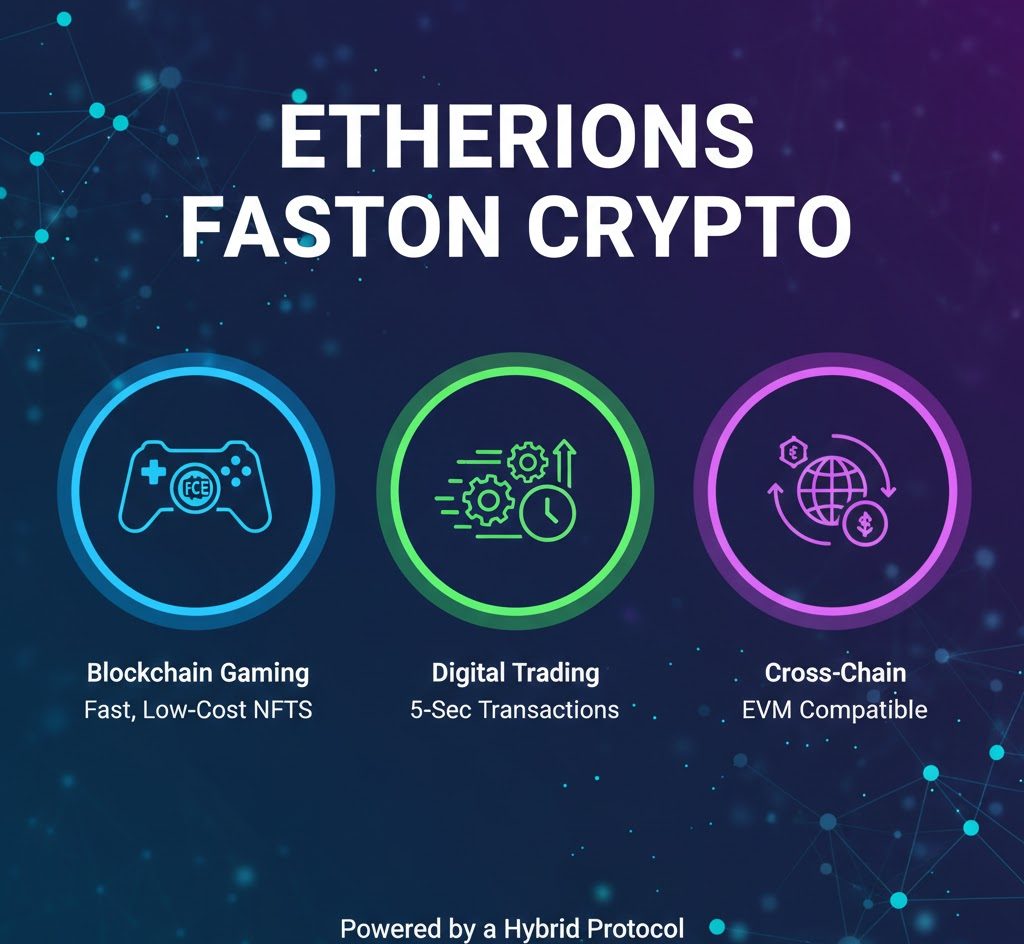
Blockchain platforms continue to grow in early 2026, and Etherions Faston Crypto (FCE) has drawn attention from gamers, developers, and digital asset traders. The network merges Ethereum-based compatibility with a protocol built for speed, offering quick processing, near-zero fees, and cross-chain support. This article covers the platform’s architecture, real-world use cases, and what it means for blockchain gaming and digital trading in 2026.
What Is Etherions Faston Crypto?
Etherions Faston Crypto runs on a dual consensus system that combines elements of Proof of Stake and Proof of Work. This approach keeps the chain secure while confirming operations in roughly five seconds. The platform allows builders to deploy decentralized apps and smart contracts without heavy code rewrites.
FCE has a total supply of 100 million tokens, with a portion allocated for community development and ecosystem growth. Teams already working with Ethereum-based tools can migrate their projects with minimal adjustments. For those comparing crypto trading platforms in 2026, FCE stands out for its balance of cost, speed, and developer access.
Etherions Faston Crypto Core Capabilities
| Capability | Details |
|---|---|
| Confirmation Speed | ~5 seconds per operation |
| Fee Structure | Near-zero transaction costs |
| Smart Contract Access | Full dApp and contract deployment |
| Throughput | Thousands of operations per second |
| Chain Compatibility | Cross-chain support (Ethereum, Solana, BSC) |
| Safety Measures | AES-256 encryption, audited contracts |
How Etherions Faston Crypto Supports Blockchain Gaming
Fast and Low-Cost Transactions for Gamers
Gamers need speed. Etherions Faston Crypto delivers near-instant confirmations with fees that stay minimal. Small in-game purchases and micro-trades become practical on FCE, unlike older chains where costs spike during busy periods. A player minting an NFT or trading in-game tokens on FCE pays a fraction of what Ethereum charges.
This cost structure changes how play-to-earn models function. Players keep more of what they earn, and developers can build gaming platforms without worrying about gas fees pushing users away.
Developer Tools for dApps and NFT Marketplaces
FCE gives developers a full environment for building games, NFT marketplaces, and staking pools. The chain supports EVM compatibility, so existing Ethereum-based projects can move over with minimal effort. Grant programs back promising projects and all deployed contracts go through security audits.
Etherions Faston Crypto for Digital Trading
Traders benefit from FCE’s throughput. The network handles thousands of operations each second without slowdowns. Cross-chain compatibility means assets can move between Ethereum, Solana, and Binance Smart Chain through the FCE protocol.
This makes FCE suitable for decentralized finance applications. Swaps, lending, and yield generation all happen at lower gas costs compared to Ethereum mainnet. Users looking to make smarter financial decisions can use FCE’s staking pools to earn passive returns on held tokens.
Real-World Applications of Etherions Faston Crypto
| Application Area | How FCE Helps |
|---|---|
| Decentralized Finance | Quicker swaps, lending, and yield generation at lower gas costs |
| Play-to-Earn and NFTs | Affordable minting and token rewards for players |
| Global Fund Transfers | Instant cross-border payments with near-zero fees |
| Business Supply Chains | Contract-based tracking for goods and logistics |
Global fund transfers on FCE complete in seconds and cost nearly nothing. Traditional wire transfers can take days and charge $25-$50 per transaction. FCE reduces both time and expense.
Supply chain tracking is another area where FCE’s smart contracts add value. Businesses can record shipment data, verify authenticity, and trigger payments automatically when goods reach their destination. Data-driven business tools can integrate with on-chain records to provide real-time visibility across logistics networks.
Etherions Faston Crypto Energy Usage and Sustainability
FCE’s hybrid consensus model consumes far less power than pure Proof-of-Work chains. Bitcoin’s annual energy consumption exceeds 150 TWh. Ethereum’s shift to Proof of Stake in 2022 reduced its footprint by 99.95%. FCE follows a similar low-energy path while retaining some PoW elements for added security.
This energy profile aligns with current environmental standards. Developers building on FCE can market their projects as low-carbon without sacrificing transaction speed or network security.
Builder and Community Support on FCE
The FCE team publishes quarterly development roadmaps and regular updates. Educational materials, open forums, and grant programs help new builders get started. All deployed projects go through security audits, adding trust for end users.
Developers looking to evaluate digital tools for building projects will find FCE’s SDK documentation and API resources accessible. The community channels on Discord and Telegram remain active, with direct interaction between the core team and builders.
For those researching tech-focused knowledge hubs, FCE’s documentation stands out for its directness and clear structure.
Risks and Considerations for Etherions Faston Crypto
Market volatility affects all cryptocurrencies, and FCE is no exception. Token prices can swing sharply in short timeframes. Regulatory uncertainty across jurisdictions also poses a risk, as governments continue to refine their approach to digital asset oversight.
The platform’s reliance on a modified Ethereum blockchain introduces a dependency. If the underlying protocol faces a security vulnerability, FCE could be affected. Conduct thorough research before committing funds to any investment, crypto or otherwise.
How to Get Started With Etherions Faston Crypto
Setting up on FCE follows a standard process. Create a wallet compatible with EVM chains. Fund it through a supported exchange. Connect to the FCE network through the official portal. From there, users can trade tokens, stake for yield, mint NFTs, or interact with deployed dApps.
Developers can clone starter templates from the FCE GitHub repository and deploy test contracts on the network’s testnet before going live. Startup tools designed for scaling operations can work alongside FCE’s infrastructure for teams building products on the chain.
FAQs
What sets Etherions Faston Crypto apart from other blockchains?
FCE combines five-second confirmations, near-zero fees, EVM compatibility, and a dual PoS/PoW consensus model. This mix of speed, cost, and Ethereum tooling support differentiates it from most alternatives.
Does Etherions Faston Crypto work for NFT-based games?
Yes. Players can mint, trade, and earn token rewards without steep gas fees. The low transaction cost makes micro-transactions within play-to-earn games practical.
Can Ethereum developers migrate projects to Etherions Faston Crypto?
FCE supports full EVM compatibility. Ethereum-based smart contracts and dApps can migrate with minimal code adjustments, reducing transition time and development costs.
Who can build on the Etherions Faston Crypto network?
Anyone from independent app creators to large DeFi teams and NFT studios. Grant programs offer extra financial support for early-stage projects with strong potential.
Is Etherions Faston Crypto energy efficient?
FCE’s hybrid consensus model uses significantly less energy per transaction than Bitcoin’s Proof-of-Work system, aligning with current sustainability expectations for blockchain networks.