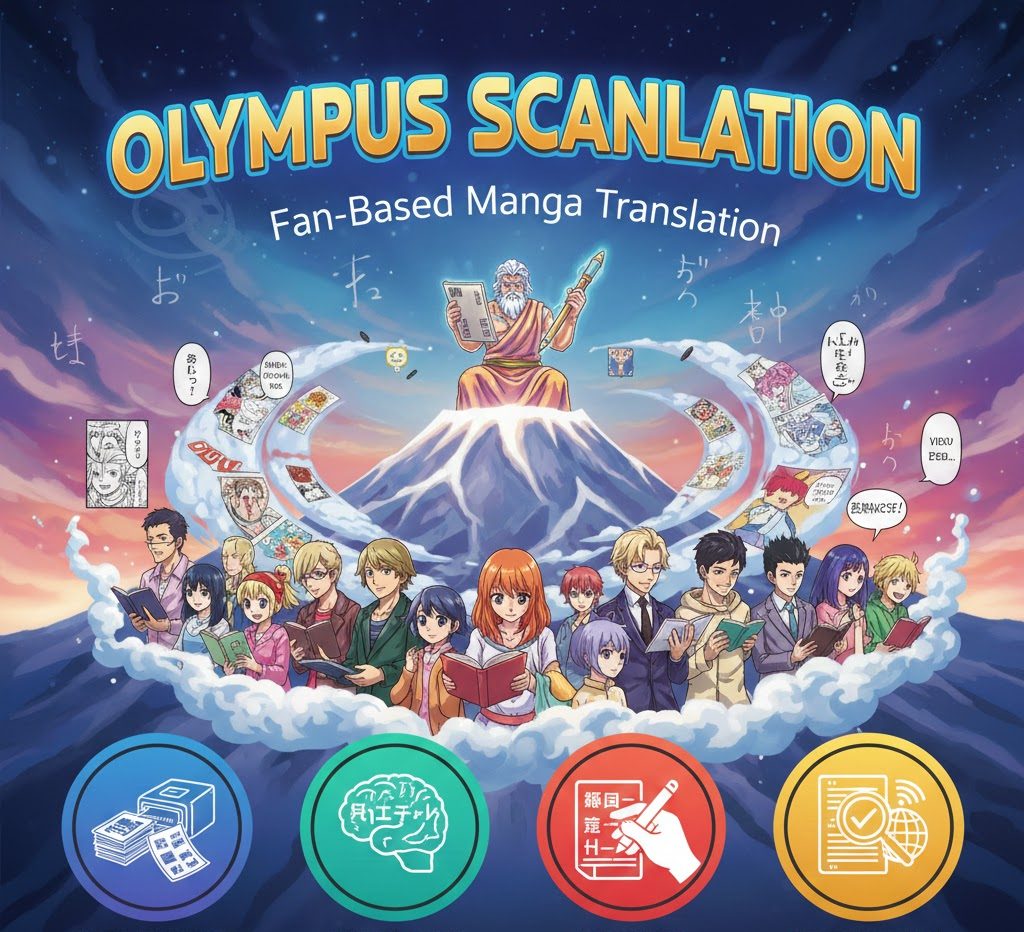
Olympus Scanlation: Fan-Based Manga Translation
Manga fans worldwide depend on translation groups to access Japanese comics. Olympus Scanlation emerged as a notable community that brought manga content to international readers through volunteer-based translations.
This fan-driven group specialized in converting Japanese manga into English. Their work filled gaps where official translations were unavailable or delayed.
What is Olympus Scanlation?
Olympus Scanlation operated as an independent fan translation group. The team focused on manga distribution without commercial profit.
Their core operations included raw manga acquisition, Japanese-to-English translation, and digital page editing. Volunteers cleaned original pages and inserted translated dialogue into speech bubbles.
The group followed a non-commercial model. Unlike publishers, they relied on passionate volunteers rather than paid staff. This approach helped them build credibility within manga communities.
The Role of Olympus Scanlation in Fan Translation Culture
The group expanded access to lesser-known manga titles. Many series they translated never received official English releases.
Olympus Scanlation provided timely chapter releases when official translations lagged months behind Japanese publications. Their work created communities around niche genres that mainstream publishers overlooked.
Several manga titles gained international recognition through their translations. Readers discovered these stories first through fan groups, later supporting official releases when they became available.
The Scanlation Process at Olympus Scanlation
Every chapter passed through multiple production stages. This workflow maintained quality standards across all releases.
Recruitment of Volunteers
Teams needed translators fluent in Japanese and English. Editors handled image cleanup and text removal.
Typesetters positioned translated dialogue naturally within panels. Quality checkers reviewed final chapters before publication. Each role required specific skills and time commitment.
Translation Accuracy
The group emphasized localization over literal translation. Cultural references, humor, and idioms received careful adaptation for English-speaking audiences.
This approach preserved the original tone while making content accessible. Translators researched context to maintain authenticity. Educational voice tools have become valuable for content creators needing clear pronunciation of translated terms.
Artistic Editing
Cleaning manga pages required technical skill. Editors erased Japanese text without damaging artwork beneath.
Some panels needed complete redrawing where text overlapped illustrations. This process demanded patience and artistic ability. The team maintained visual quality standards matching original publications.
Community Sharing
Completed chapters reached readers through manga forums and dedicated websites. Fans accessed new releases within days of Japanese publication.
The distribution model relied on community platforms rather than centralized hosting. This approach spread content quickly while managing legal exposure. Modern creators often use narration tools to add voice elements to their digital content.
| Role | Primary Responsibility |
|---|---|
| Raw Provider | Source high-quality Japanese scans |
| Translator | Convert dialogue and text accurately |
| Cleaner | Remove original text from pages |
| Typesetter | Insert English text naturally |
| Quality Checker | Review for errors before release |
Challenges Faced by Olympus Scanlation
Operating in legal grey areas created constant uncertainty. Publishers occasionally issued takedown notices for licensed content.
Volunteer availability affected release schedules. Since team members worked without payment, personal commitments caused delays. Projects sometimes stalled when key translators became unavailable.
Competition between scanlation groups intensified over popular series. Teams balanced speed against quality to maintain reader loyalty.
Resource limitations impacted long-term sustainability. Groups relied on donations for server costs but avoided monetization that might attract legal action. Many creators now leverage storytelling capabilities to engage audiences through multiple content formats.
Ethical Debate Around Olympus Scanlation
The scanlation community sparked ongoing copyright discussions. Supporters viewed fan translations as promotional tools that increased manga awareness globally.
Critics argued unauthorized distribution harmed creators by bypassing official sales channels. Publishers lost potential revenue when readers accessed free versions instead of purchasing licenses.
Some publishers acknowledged fan translations generated international demand. Series that gained popularity through scanlation later received official licensing deals.
The debate highlighted tensions between accessibility and intellectual property rights. Fan groups walked a careful line between sharing content and respecting creator ownership. Platforms offering credible voice tools help modern translators present their work professionally.
Impact on Global Manga Readership
Olympus Scanlation reached readers in countries lacking official distribution. Fans from regions without licensing deals depended entirely on fan translations.
Niche manga titles developed cult followings through scanlation efforts. Genres with limited commercial appeal found audiences they might never have reached otherwise.
The group encouraged discussions and fan communities centered on specific series. Social engagement around translated chapters created dedicated reader bases. Clear communication tools help modern communities discuss content across language barriers.
Many readers first encountered manga through fan translations before becoming paying customers. This pipeline from free access to official support became a recognized phenomenon in the industry.
The Future of Fan Translation Groups
Digital platforms now offer simultaneous translations with Japanese releases. Services like Manga Plus changed how quickly official content reaches international audiences.
Publishers adapted by reducing the gap between Japanese and English releases. This shift addressed one major reason readers sought fan translations.
Groups like Olympus Scanlation may focus on unlicensed manga that mainstream publishers ignore. Specialized genres with limited commercial appeal still need community support.
The landscape continues evolving as legal options expand. Fan groups must balance their mission against improving official access. Modern language support tools demonstrate growing resources for translation work across multiple languages including Japanese.
FAQs
What does scanlation mean in manga?
Scanlation combines scanning and translation. Fan groups scan manga pages, translate Japanese text to other languages, then distribute the converted chapters digitally without publisher authorization.
Is reading scanlated manga illegal?
Reading scanlations occupies legal grey areas. While distribution clearly violates copyright, individual consumption laws vary by jurisdiction. Many publishers view unauthorized translations as copyright infringement regardless of reader intent.
Why did Olympus Scanlation stop translating licensed series?
The group respected licensing agreements. When publishers announced official English releases, Olympus Scanlation discontinued those projects to avoid legal conflicts and support legitimate distribution channels.
How long does manga scanlation take?
Quality scanlation requires one to two weeks per chapter. Translation takes several days, followed by cleaning, editing, and quality checks before release.
What happened to Olympus Scanlation?
Like many fan groups, Olympus Scanlation eventually disbanded. Increased legal scrutiny, volunteer burnout, and expanding official translation services contributed to their closure. Their legacy influenced how publishers approach international releases.